
A PostgreSQL (PostGIS) Perspective

Modern applications are no longer just data-driven — they are location-aware. From logistics and smart cities to real estate, GIS, and IoT platforms, spatial data has become a core asset. But spatial data is also heavy, complex, and expensive to process if not handled correctly.
This is where PostgreSQL with PostGIS stands out — provided that spatial data is modeled and optimized properly.
This article explains how to optimize spatial data in a relational database, using PostgreSQL as a practical example.
Why Spatial Data Needs Special Optimization
Spatial queries are fundamentally different from classic relational queries.
Instead of:
- equality checks
- simple joins
- indexed numeric lookups
you deal with:
- distance calculations
- geometric intersections
- containment and proximity searches
Without optimization:
- full table scans become unavoidable
- CPU usage spikes
- query times grow exponentially with data size
A spatially unaware schema will not scale.
Choosing the Right Geometry Type
The foundation of optimization starts at the schema level.
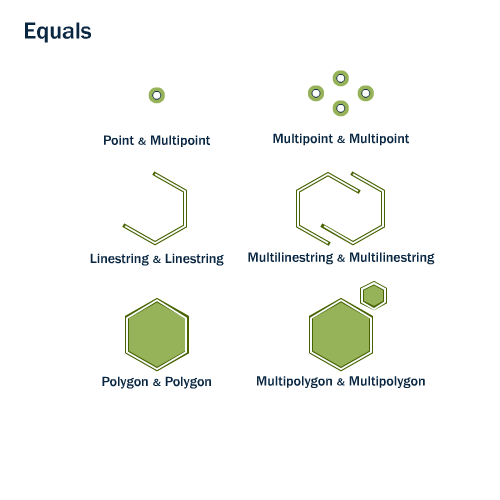
In PostgreSQL (via PostGIS), spatial data should never be stored as:
- plain text (WKT)
- JSON objects
- latitude / longitude numeric pairs without geometry
Instead, use native geometry types:
geometry(Point, 4326)
geometry(Polygon, 4326)
geometry(LineString, 4326)
Why this matters:
- Enables spatial indexing
- Allows use of spatial functions
- Ensures CRS consistency
- Reduces application-level calculations
If geometry is not native, optimization is impossible.
Spatial Indexing: The Real Performance Breaker
No spatial index = no performance.

PostGIS uses GiST (Generalized Search Tree) indexes for spatial data.
Example:
CREATE INDEX idx_locations_geom
ON locations
USING GIST (geom);
What this gives you:
- Orders-of-magnitude faster spatial queries
- Bounding-box pre-filtering
- Efficient proximity searches
Without this index:
- Every spatial query becomes a full scan
- Performance collapses as data grows
This is non-negotiable.
Use Bounding Boxes Before Exact Geometry Checks
A common mistake is jumping straight to precise geometry operations.
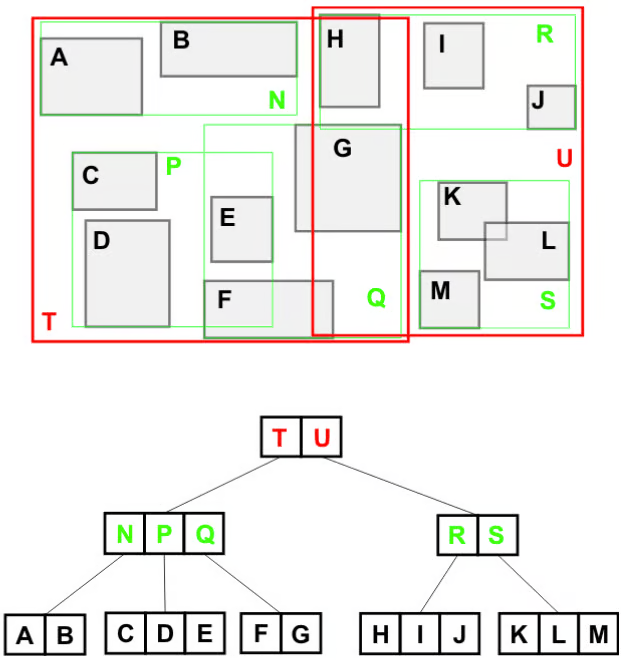
Bad approach:
ST_Intersects(a.geom, b.geom)Better approach:
a.geom && b.geom
AND ST_Intersects(a.geom, b.geom)
Why?
&&uses the spatial index (fast)ST_Intersectsruns only on filtered candidates (accurate)
This two-step pattern is critical for high-performance systems.
CRS Consistency: Silent Performance Killer
Coordinate Reference Systems (CRS) must be consistent.
Mixing:
- EPSG:4326 (WGS84)
- EPSG:3857 (Web Mercator)
- local projected systems
without control leads to:
- on-the-fly transformations
- index bypassing
- incorrect distance calculations
Best practice:
- Store data in one canonical CRS
- Transform only at presentation or API level
- Never mix CRSs in spatial joins
CRS chaos quietly destroys performance.
Avoid Recalculating Geometry on the Fly
This is a classic anti-pattern:
ST_Transform(geom, 3857)inside queries that run frequently.
Instead:
- Precompute derived geometries
- Store them in separate columns
- Index them independently
Example
geom_wgs84
geom_webmercator
Storage is cheap. CPU time is not.
Query Only What You Need
Spatial tables tend to be wide:
- attributes
- metadata
- geometry
- derived fields
Avoid:
SELECT *Prefer:
SELECT id, name, geomEspecially in APIs, this:
- reduces network payload
- improves cache efficiency
- lowers serialization cost
This matters more than most developers think.
Partitioning for Large Spatial Datasets
For millions of geometries, indexing alone is not enough.
Use:
- spatial partitioning (by region, tile, grid)
- temporal partitioning (if data is time-based)
- hybrid strategies
Partitioning:
- reduces index size
- limits query scope
- improves maintenance operations
Large spatial systems must be partition-aware.
PostgreSQL + PostGIS: Built for Serious Spatial Systems
PostgreSQL with PostGIS is not a “nice-to-have GIS database”.
It is:
- production-proven
- scalable
- enterprise-ready
- open-source without vendor lock-in
But only if:
- schema design is deliberate
- indexing is correct
- queries are spatially aware
Spatial optimization is not magic — it is discipline.
Final Thoughts from Rodosto Teknoloji
Spatial data optimization is where software engineering meets geography.
Teams that treat spatial data like ordinary tables:
- struggle with performance
- fight scalability issues
- blame infrastructure instead of design
Teams that design spatial systems correctly:
- scale confidently
- respond faster
- build future-proof platforms
At Rodosto Teknoloji, we design spatial data architectures that are fast, scalable, and production-ready — not just “working”.
If your system is location-aware, your database must be too.